arcVIC Reference Guide
Lead Product Designer & UX Architect
The Problem
Field social workers operating in high pressure environments cannot afford cognitive overload. The existing workflow relied on dense, static paper compliance guidelines,
creating unnecessary friction and administrative burden when logging critical patient interactions.
The Solution
Digitizing public health workflows from static paper to an interactive utility. I transformed the dense guidelines into an empathetic, component driven mobile application.
By restructuring clinical data into a clear visual hierarchy with custom iconography, the app eliminates friction and streamlines operational compliance.
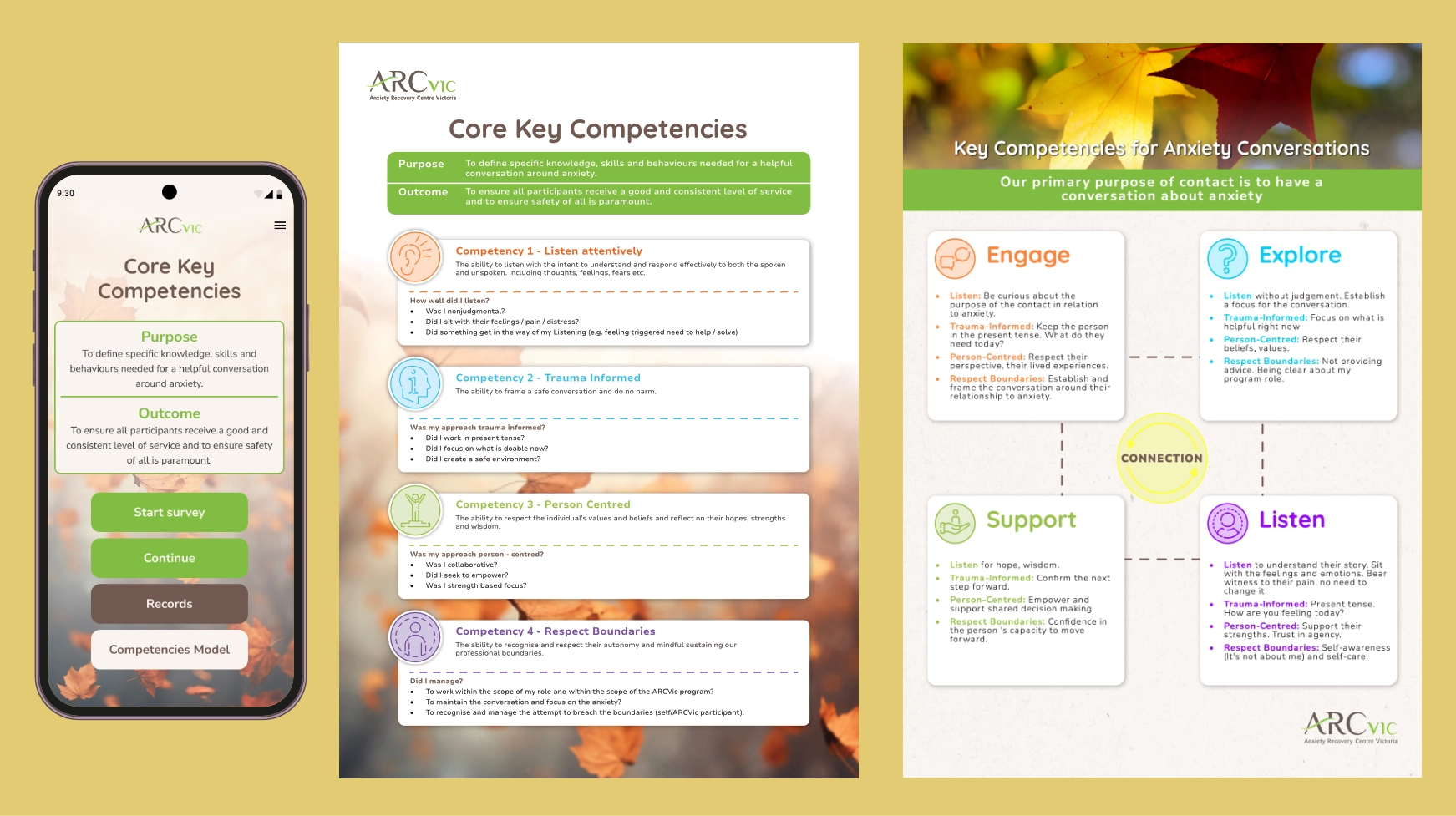
Information Architecture & Clinical Constraints
Field social workers require immediate access to "Core Key Competencies." Before beginning any digital prototyping, I first audited the raw clinical data and typeset it into a highly legible visual hierarchy, ensuring that all strict compliance parameters were structurally sound and easy to parse under pressure.

Reducing Cognitive Load via Iconography
To prevent cognitive fatigue in high-stress environments, I engineered a custom vector icon system in Adobe Illustrator representing the four core competencies.
Utilizing uniform vector stroke weights and a strict, accessible color mapping strategy, these assets serve as psychological anchors. This structural approach ensures instant cross interface recognition, allowing users to navigate critical parameters purely by visual reflex.
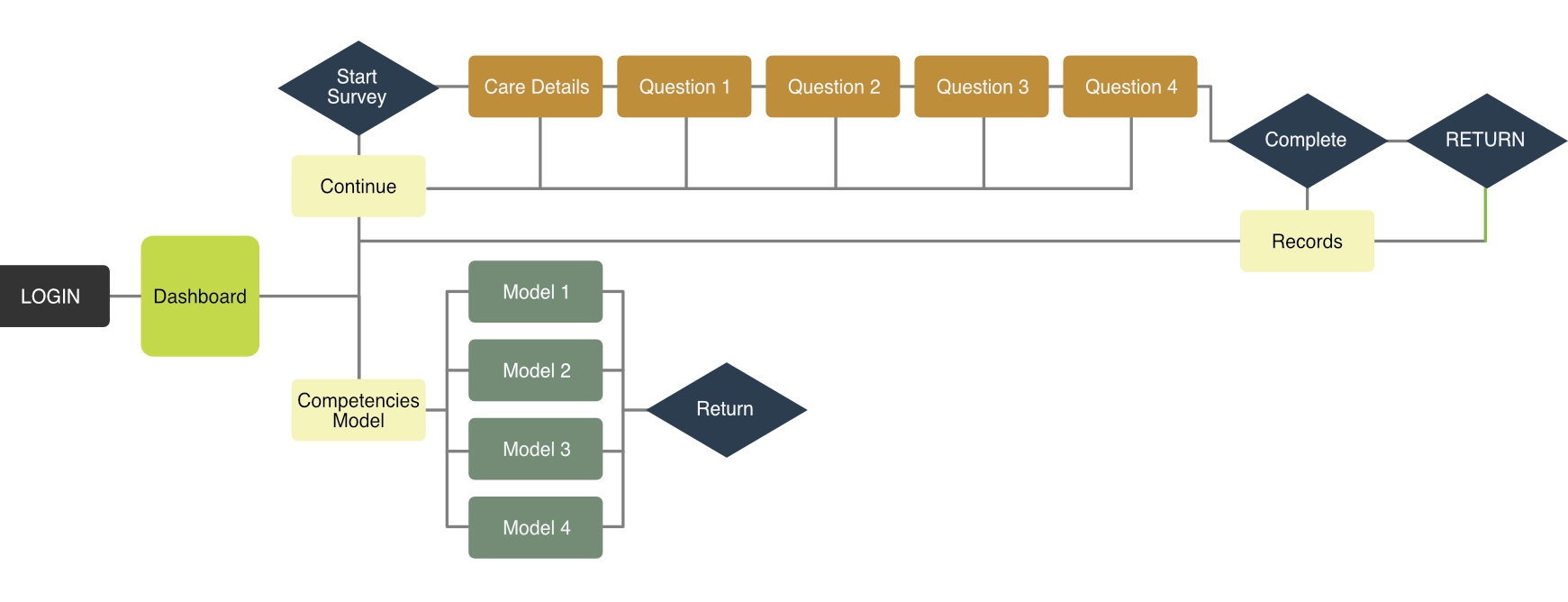
Mapping the Architecture of Compliance
Social workers rarely sit at a desk; they operate in vehicles and community centers. To ensure zero data drop off during field operations, I mapped a rigid system logic tree. The resulting architecture splits user intents into two clean pathways stemming from a central dashboard: a linear interactive survey wizard and a modular reference portal.
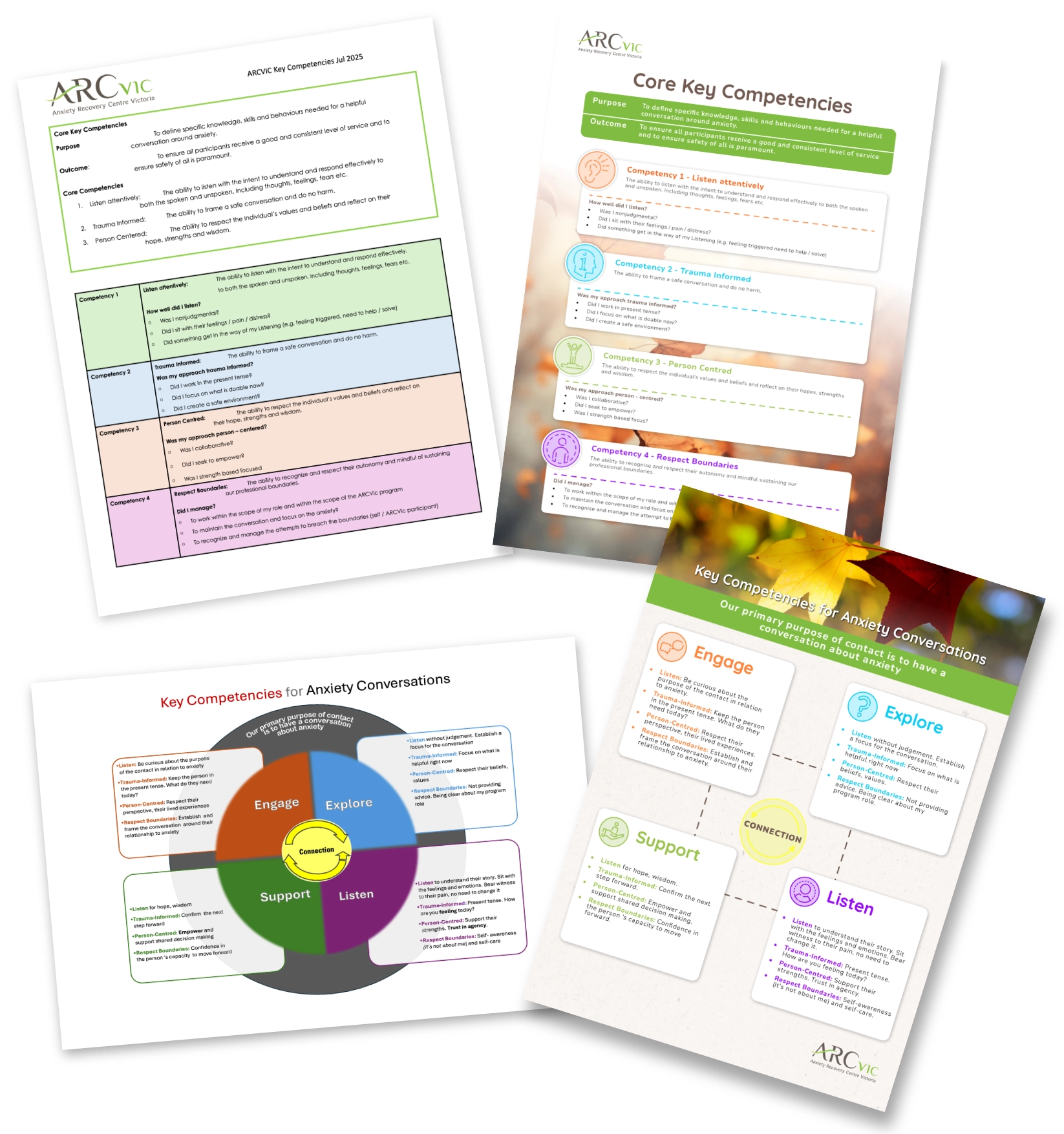
Themed Interaction Loops
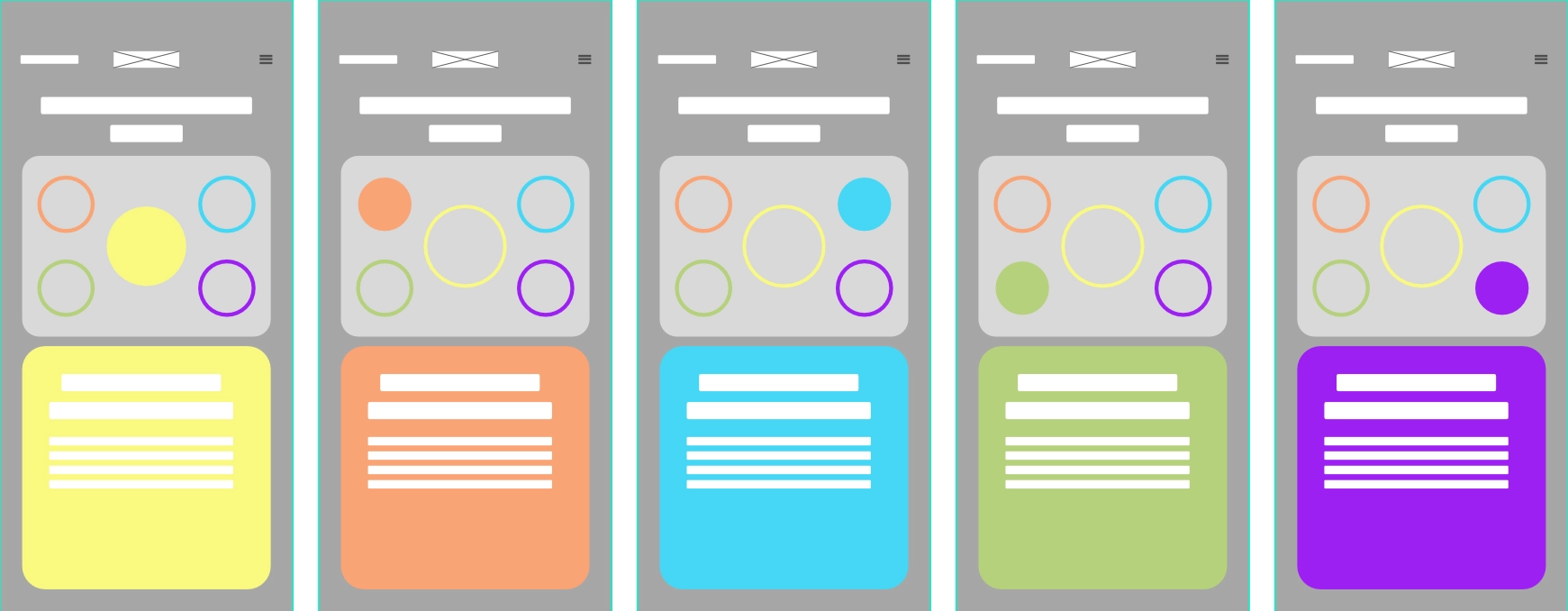
Engage, Explore, Support, and Listen. Rather than treating these behavioral pillars as passive text, I translated each phase into a distinct programmatic component. By coordinating a dynamic theme engine, the interface physically reflects the calm, deliberate pacing required for anxiety conversations.
Component-Driven UI for Rapid Data Entry
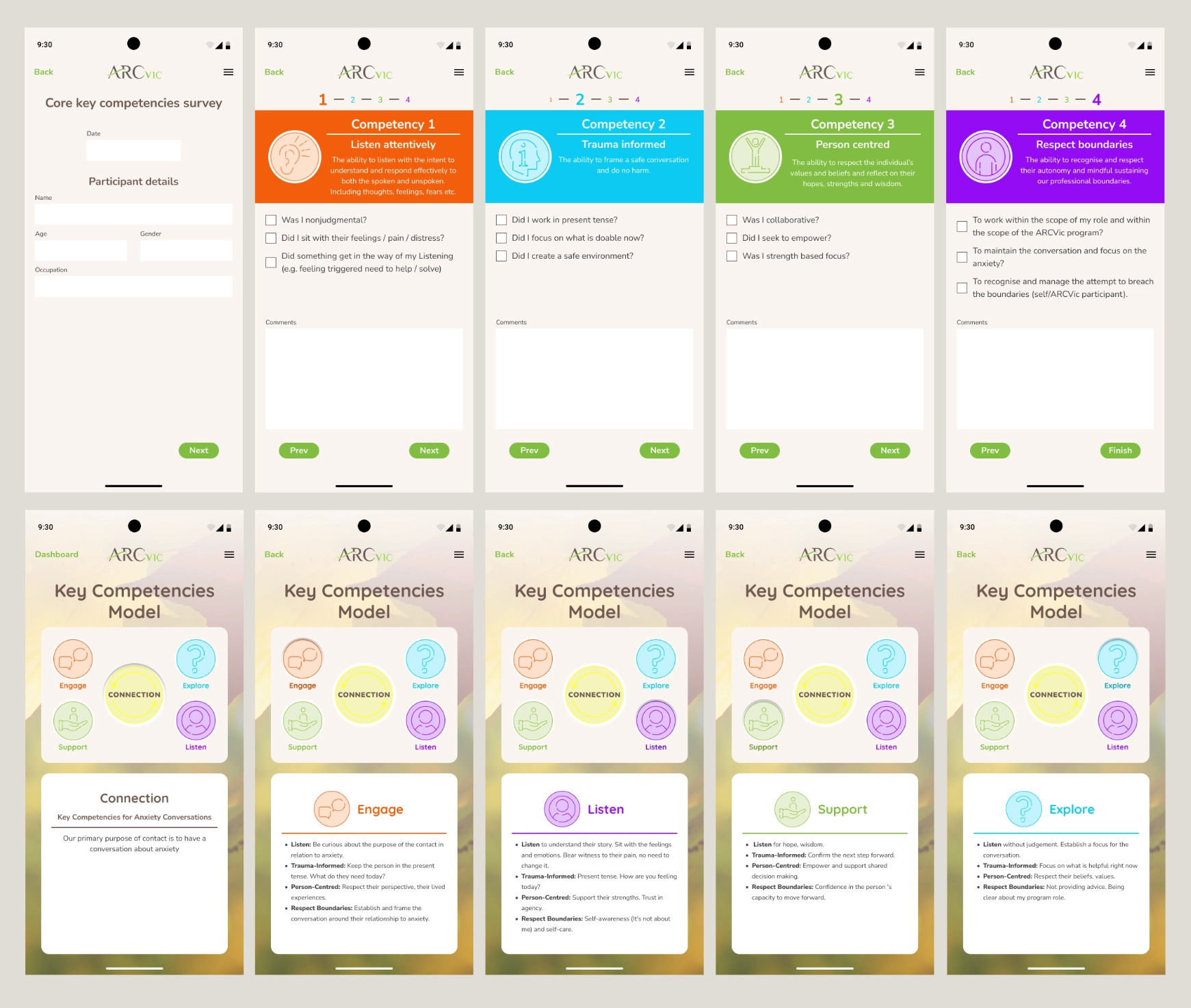
Transitioning into Figma, I reimagined the workflow as a fully interactive mobile application optimized for one handed field use. To translate my print design layout rules into dynamic screens, I built a rigid component library utilizing global color styles, modular progress tickers, and explicit field input states featuring generous touch targets. The resulting core survey wizard allows workers to check off operational criteria dynamically, drastically cutting down post-session administrative burden.
Interactive Ecosystem & Feedback
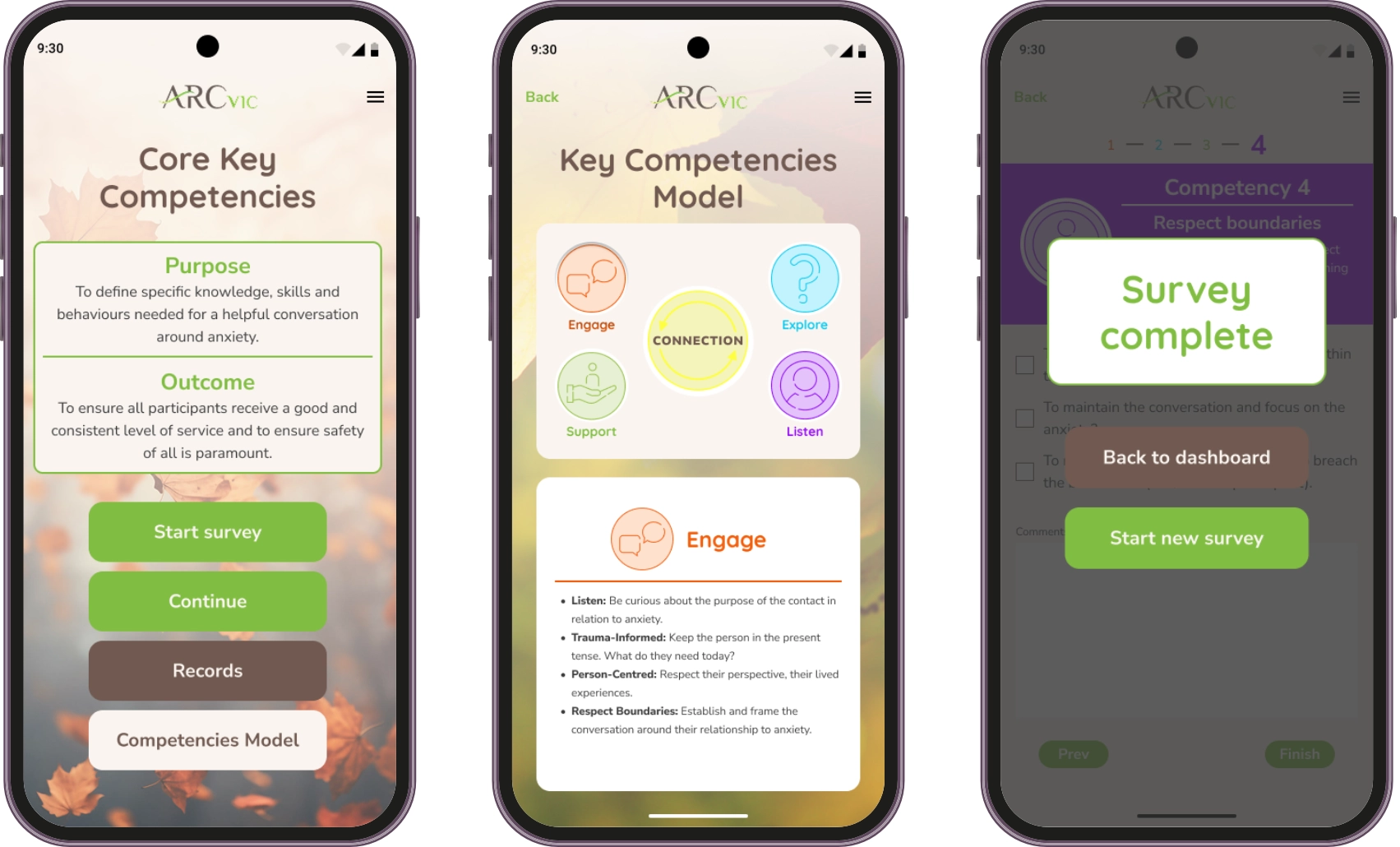
The finalized interface establishes a clear starting point by splitting user intents into actionable primary buttons. When launching the Key Competencies Model, users interact with a responsive, color coded layout. Upon task completion, the validation flow triggers a clear, structural state confirmation modal, providing immediate system feedback before securely handling the data submission states.
Field Testing & Stakeholder Alignment
[Action Item for Alfredo: Add 2-3 sentences here detailing how you validated this UI. Did you test the interactive prototype with social workers? Did management provide feedback on how the new flow would impact their daily operations? Mentioning alignment between user needs and business/compliance goals is highly effective here.]
Multi-Channel Compliance Reporting
A core project requirement was bridging the operational gap between field workers and office administration. I engineered a dual output framework that intelligently formats a single dataset into two distinct mediums.
While social workers view instant insights on an optimized mobile summary, administrative managers receive a print ready A4 document. I designed this export template with precise grid margins and typographic hierarchies, proving that digital efficiency does not have to sacrifice physical documentation standards.